Editorial Policies

Author Guidelines

  1. The manuscript is an original work of the author, and the team, based on research results, and has not and will not be published in any media.
  2. The article has not been published in any language translation.
  3. The manuscript must be submitted in .docxformat. The author(s) can download the template at the sidebar to prepare and write the manuscript.
  4. The maximumacceptablesimilarityindex for any submitted manuscript is 20%. All articles are rigorously screened using anti-plagiarism software prior to proceeding to the peer-review stage. Submissions exceeding this predetermined threshold will be subject to immediate rejection or termination of the editorial process.
  5. The manuscript contains research related to public relations (see Focus and Scope).
  6. The article uses English (American), consisting of 6000-7500 words, Open Sans 12, spacing 1.15, A4, all margin 2 cm.
  7. The title contains a maximum of 12 words, without abbreviations, 14-point Open Sans, Sentence case, Bold, center, space 1, without subtitles and punctuation.
  8. The names of all authors are written completely without abbreviation, without title, 12-point Open Sans, Capital Each Word, bold, center, spacing 1.
  9. The name of the institution of each author listed only the names of colleges or corporate institutions (without abbreviation). Example: Faculty of Social and Political Sciences, Universitas Pembangunan Nasional Veteran Jakarta or Department of Communication, CV. Prendamedia Group
  10. The author(s) should use an appropriate email address.
  11. Abstract, made in essay form, consists of background, purpose, methods, results, and implications written in one paragraph, 11 point Open Sans, space 1, justify paragraph, 200-250 words, no numbering. Articles written in Bahasa Indonesia must place the English title and abstract at the beginning of the manuscript.
  12. Keywords consist of 5 relevant words/phrases.
  13. Quotation of more than 3 lines or 40 words should write in direct quotation style (spacing 1 with margin indented).
  14. Every paragraph should use a tab / 7 beats, consisting of at least 2 sentences, space 1.15, justify, 12 point Open Sans.
  15. The manuscripts only consist of
  • INTRODUCTION,
  • RESEARCH METHODS,
  • RESULT AND DISCUSSIONS,
  • CONCLUSION, and
  • REFERENCES.
  1. Sub-chapter that are not included in point 16 above is not allowed. Sub-Chapter should be written with 1.5 spacing, Capital, 12 point Open Sans, bold, left margin.
  2. INTRODUCTION shouldconsist of:
  • Background problems with supporting data attached, 
  • Research objectives and review of relevant research, 
  • The relevant theoretical foundation/concept.
  1.     RESEARCH METHODS should consist of:
  • The type of research (each citation must be attached), 
  • Subject and object, 
  • Data collection techniques, 
  • Data analysis techniques, 
  • The location and time of the research.
  1.     RESULTS and DISCUSSION should contain:
  • The findings of the research, supported by several references (Consist of a minimum of 80% journal with year reference max 10 years),
  • Results should contain table or picture (minimum 1 and maximum 6),
    • The sources should write on the bottom left of the table.
    • The table's title is placed above the table left margin, 12-point Open Sans, bold, and space 1.
    • Tables created without a vertical line. See the example below.
    • Pictures could be graphics, diagrams, schematics, or photos. The title, source, and picture should be grouped, so they will not rupture when the layout is created.
    • The image's title should be placed below the image, left margin, 12-point Open Sans, bold, space 1, and the source listed in the bottom left of the image. See example below

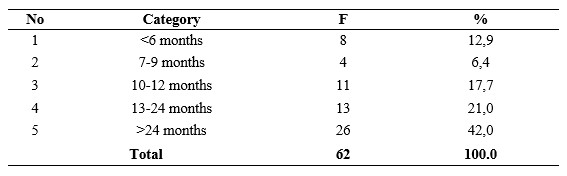
Example of Table Insertion:

Table 1 Length of Time in Business Using Instagram Social Media

Source: Research Result, 2015


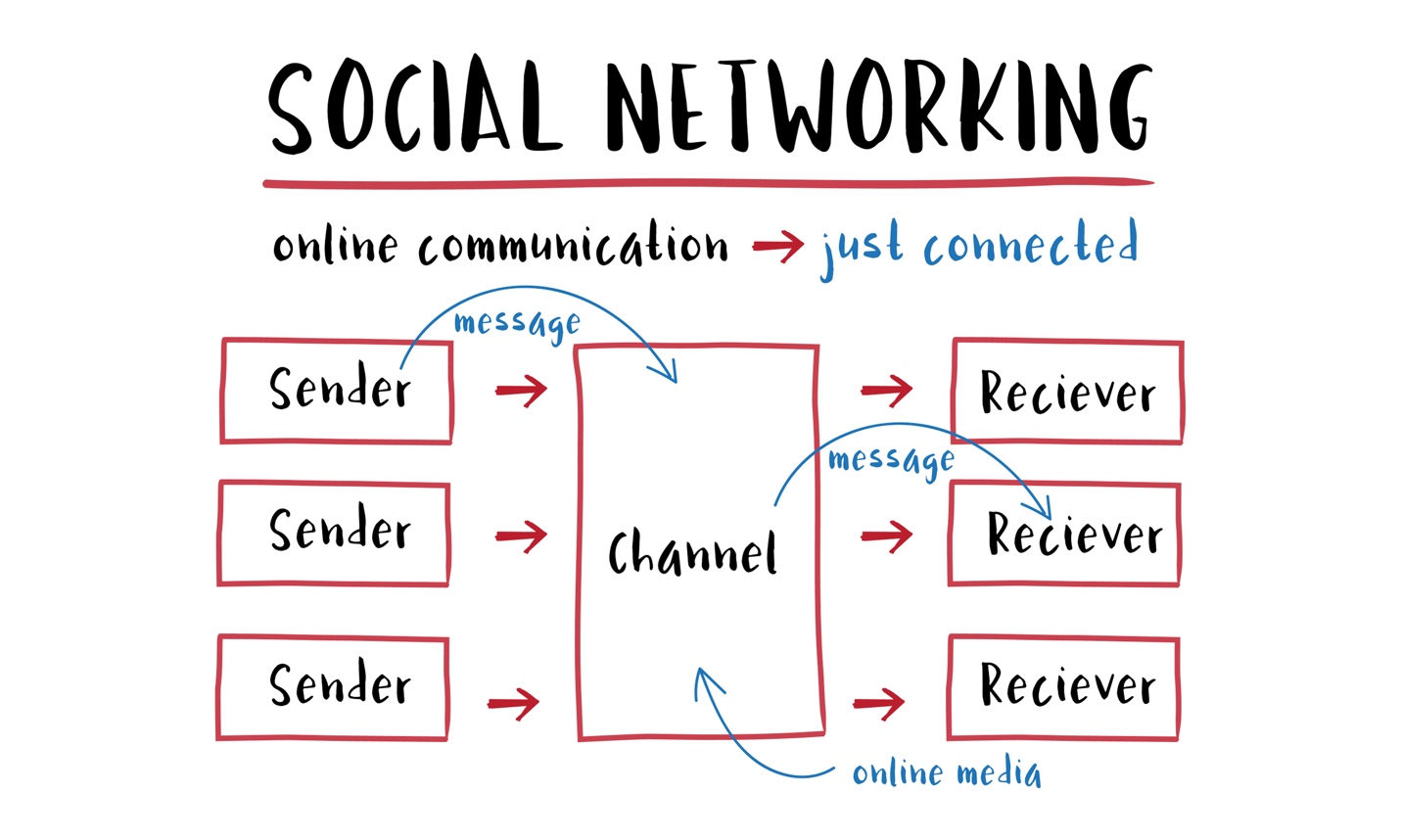
Example of Figure Insertion:

Source: freepik.com, 2025

Figure 1 Social Network designed by Freepik


  1. CONCLUSION contains research findings. It should answer research goals and give applicative recommendations. Moreover, it must be written in a paragraph without numbering.
  2.    The author should state:

Guidance regarding this statement can be seen in the journal template (Download in the left sidebar).

  1.    REFERENCES
  • Follows the APA style (American Psychological Association) http://www.apastyle.org
  • Suggested using Mendeley (click the Mendeley icon on the journal homepage)
  • Arranged by alphabetic
  • Consists of relevant reference sources
  • Comprised at least 25 reference sources
  • Contains at least 60% of English language sources
  • Contain at least 80% (20 sources) from journal articles, with a minimum of 15 sources from international journals.
  • References with a maximum of 10 years (If it is not possible, then a maximum of only 4 sources of reference may be more than 10 years).

 The sample of citation style:

Book
Kotler, P. & Keller, KL. (2012). Marketing management. Prentice Hall.

e-book
Sulaksana, N. (2017). Geomorfologi dan penginderaan jauh. Diakses dari 
http://ebook.press.unpad.ac.id/product/geomorfologi-dan-penginderaan-jauh/.

Article from website with author's name
Simmons, B. (2015, January 9). The tale of two flaccos. Diakses dari  http://grantland.com/the-triangle/the-tale-of-two-flaccos/.

Article from the website without author's name
Teenposed as doctor at West Palm Beach hospital: police. (2015, January 16). Diakses dari http://www.nbcmiami.com/news/local/Teen-Posed-as-Doctor-at-West-Palm-Beach-Hospital-Police-288810831.html.

Printed journal
Aisha, S. & Mulyana, D. (2019). Indonesian postgraduate students' intercultural communication experiences in the United Kingdom. Jurnal Kajian Komunikasi, 7(1), 1-13.

e-journal
Jameson, J. (2013). E-Leadership in higher education: The fifth “age” of educational technology research. British Journal of Educational Technology, 44(6), 889-915. doi: 10.1111/bjet.12103.

Interview
Marino, B. (2014, 18 Octobers). Personal Interview.

Encyclopedia 
Kammen, C. & Wilson, A.H. (2012). Monuments. In encyclopedia of local history. (pp. 363-364) Lanham, MD: AltaMira Press.

Newspaper
Rosenberg, G. (1997, March 31). Electronic discovery proves an effective legal weapon. The New York Times, p. D5.

e-newspaper
Rosenberg, G. (1997, March 31). Electronic discovery proves an effective legal weapon. The New York Times. Diakses dari http://www.nytimes.com

Magazine
Tumulty, K. (2006, April). Should they stay or should they go? Time, 167(15), 3-40.

e-magazine
Tumulty, K. (2006, April). Should they stay or should they go? Time, 167(15). Diakses dari  http://content.time.com/time/magazine/article/0,9171,1179361,00.html.


The Online Submission Manuscript Guidelines:

The manuscript text must be submitted by Online Submission System in Prenada Journal of Communication Studies website (here):

  1. Firstly, the author should register as either an author or reviewer (checking role as author or reviewer) in the Register.
  2. After the registration step is completed, log in as an author, and click “New Submission”. The article submission stage consists of five stages:(1). Start, (2). Upload Submission, (3). Enter Metadata, (4). Upload Supplementary Files, (5). Confirmation.
  3. In the “Start” column, choose Journal Section (Full Article), and check all the checklists.
  4. In the “Upload Submission” Columns, upload the manuscript files in MS Word format in this column.
  5. In the “Enter Metadata” columns, fill in all the author data and affiliation. Including the Article Title, Abstract and Indexing Keywords.
  6. In the “Upload Supplementary Files” columns, the author can upload supplementary files, the statement letter, or anything else.
  7. In the “Confirmation” columns, if the data you entered are all correct, click “Finish Submission”.
  8. If the author has difficulties in the submission process through the online system, please contact Prenada Journal of Communication Studies editorial team at contact@communication.prenadajournal.com


Submission Self-Checklist

As part of the submission process, Authors are required to complete the self-assessment checklist provided below and submit it along with their manuscript. Failure or omission to complete this checklist may result in the manuscript not being processed or being returned to the author.

  1. The article has not been published in any language translation
  2. Already read and adjusted your article with the author guidelines for PJCS?
  3. Already checked your article with a plagiarism checker?
  4. Already used citation tools?

Copyright Notice

In order to be accepted and published by Prenada Journal of Communication Studies, Author(s) who submit an article should complete the review process. Prenada Journal of Communication Studies articles are distributed under a  Creative Commons Attribution-ShareAlike 4.0 International (CC-BY-SA)

The copyright of received articles is assigned to the Author(s). Author(s) keep the rights to articles that have been published.

The Editorial Team of PJCS and Author(s) strive to ensure that no errors (data and statements) occur in the articles that have been published. Authors who publish in this journal agree to the following terms:

  1. Authors retain copyright and grant the journal right of first publication with the work simultaneously licensed under a Creative Commons Attribution-ShareAlike 4.0 International (CC-BY-SA) that allows others to share the work with an acknowledgment of the work's authorship and initial publication in this journal.
  2. The journal allows the authors to hold the copyright without restrictions and allow the authors to retain publishing rights without restrictions.
  3. Authors can enter separate, additional contractual arrangements for the non-exclusive distribution of the journal's published version of the work (e.g., post it to an institutional repository or publish it in a book), with an acknowledgment of its initial publication in this journal.
  4. Authors are permitted and encouraged to post their work online (e.g., in institutional repositories or on their website) before and during the submission process, as it can lead to productive exchanges and earlier and greater citation of published work.

Articles can be read, adapted, and shared for noncommercial purposes under the following conditions:

  • Attribution — You must give appropriate credit, provide a link to the license, and indicate if changes were made. You may do so in any reasonable manner but not in any way that suggests the licensor endorses you or your use.
  • ShareAlike — If you remix, transform, or build upon the material, you must distribute your contributions under the same license as the original.
  • No additional restrictions — You may not apply legal terms or technological measures that legally restrict others from doing anything the license permits.


Privacy Statement

Prenada Journal of Communication Studies is a peer-reviewed journal, available in digital format and print (on demand). The journal has a publication frequency of three issues per annum (or per year). This statement clarifies the ethical behavior of all parties involved in the act of publishing an article in this journal, including the author, the chief editor, the Editorial Board, the peer-reviewer­­­­­ and the publisher. This statement is based on COPE’s Best Practice Guidelines for Journal Editors.


Author Fees

This journal charges the following author fees.

Article Submission and Publication: 0.00 (IDR)
Author(s) are not subject to any fees for the peer-review process, nor are they required to pay any charges upon the acceptance and subsequent publication of their articles.